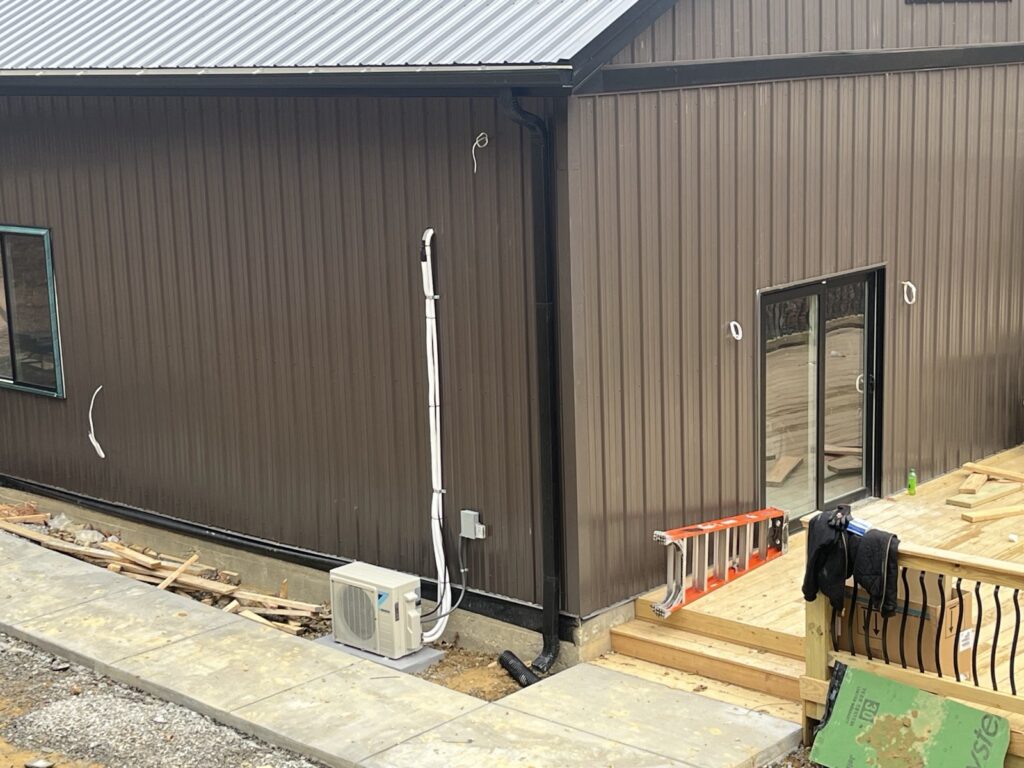
Every Louisville neighborhood has them: the finished attic that’s an oven by July, the sunroom nobody uses in January, the detached garage that would make a great workshop if it weren’t 95 degrees inside. Running new ductwork to those spaces is expensive and sometimes impossible. A ductless mini-split solves the problem with a small outdoor unit, a slim wall-mounted indoor head, and a three-inch hole through the wall. Here’s how to decide whether one is worth it for your home.
How a ductless mini-split works
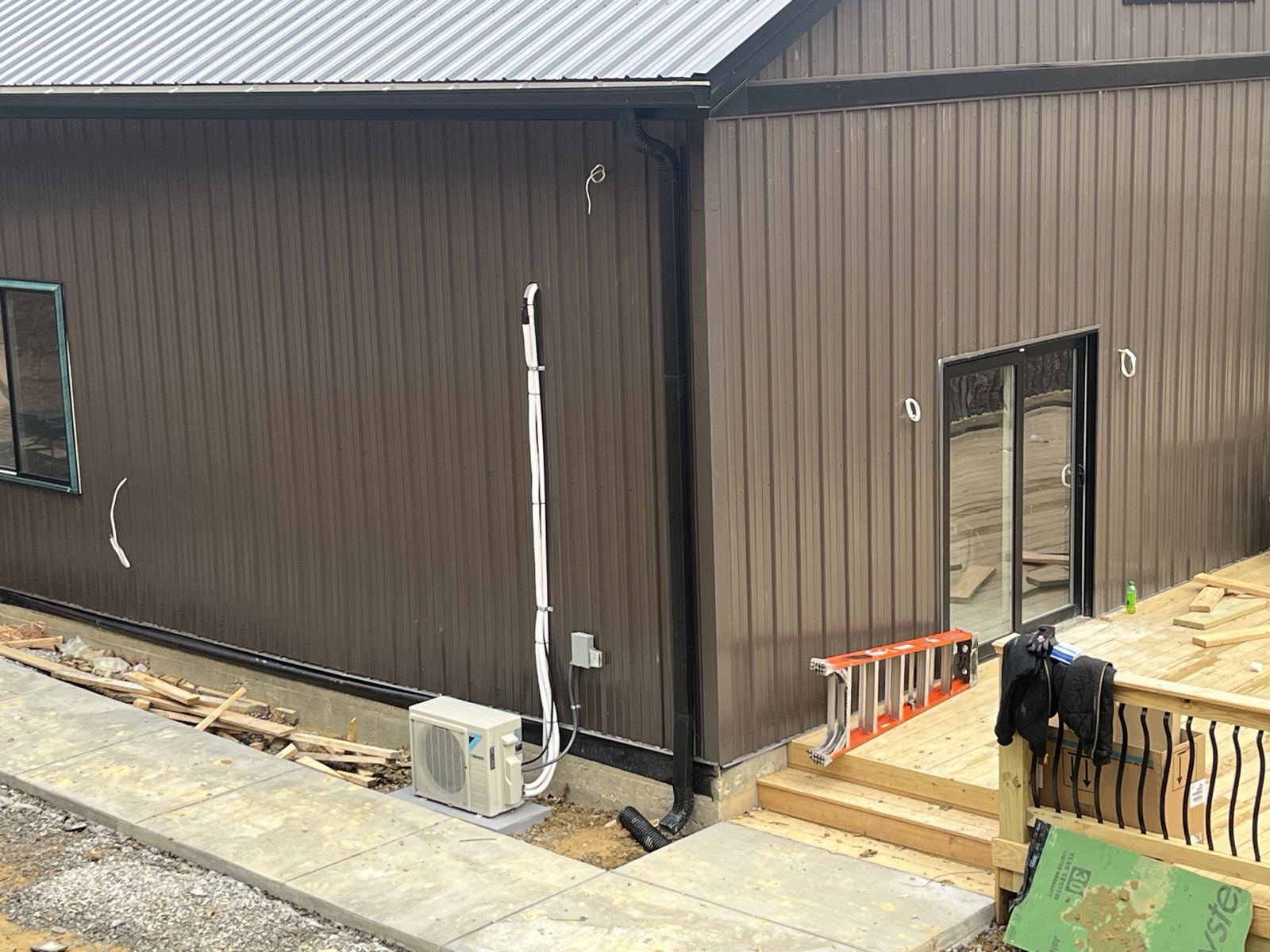
A mini-split is a heat pump split into two parts. The outdoor unit contains the compressor and looks like a compact air conditioner. One or more indoor units — usually mounted high on a wall, though ceiling cassettes and floor consoles exist — deliver conditioned air directly into the room. Refrigerant lines, a power cable and a condensate drain run between them through a small wall penetration. No ducts, no registers, no lost air in the attic.
Because each indoor head has its own thermostat, you get true room-by-room control. The office can sit at 70 while the guest room stays at 76, and rooms nobody is using can be turned off entirely.
Where mini-splits shine in Louisville homes
- Additions and bonus rooms. Extending your existing system to a new space often overloads it. A mini-split gives the addition its own properly sized heating and cooling.
- Finished attics and basements. Those rooms are usually at the far end of the ductwork and the last to get comfortable. A dedicated head fixes that for good.
- Sunrooms, garages and workshops. Spaces that only need conditioning part of the time are perfect for a system you can switch on and off independently.
- Older homes without ducts. Many classic homes in the Highlands, Crescent Hill and Old Louisville still rely on radiators or window units. A multi-zone mini-split can cool and heat the whole house without tearing into plaster walls.
- Rental units and in-law suites. Separate control for a separate living space, with no shared ductwork.
The advantages
- Efficiency. Ductless systems avoid the energy lost through leaky ducts, and inverter-driven compressors ramp up and down instead of cycling on and off. Many models carry very high SEER2 and HSPF2 ratings.
- Quiet operation. Indoor heads run at a whisper, and the outdoor units are noticeably quieter than a conventional condenser.
- Heating as well as cooling. Modern mini-splits are true heat pumps and handle Louisville winters well. Cold-climate models keep producing heat far below freezing.
- Fast installation. A single-zone system can usually be installed in a day.
- Better air quality. Multi-stage filtration at each head, with no dusty ductwork in between.
The honest downsides
- Up-front cost per room. A single-zone system costs more than a window unit, and a whole-house multi-zone system can cost as much as or more than a conventional ducted system.
- Appearance. The indoor head is visible on the wall. Most people stop noticing it within a week, but it’s worth considering in a formal living room.
- Maintenance is hands-on. The washable filters in each head need cleaning every few weeks during heavy use, and the units benefit from a professional deep clean each year.
- Coverage per head. One indoor unit conditions the room it’s in. Hallways and closed-off rooms need their own head or will lag behind.
Single-zone or multi-zone?
If you have one problem room, a single-zone system is simple and affordable. If you’re conditioning several rooms, a multi-zone outdoor unit can run two to five indoor heads. There’s a trade-off: multi-zone systems are more efficient when most zones are running, and single-zone systems are more efficient when you’re only conditioning one space. We’ll size and configure the system around how you actually use the rooms.
What a Litsey mini-split installation includes
- A room-by-room load calculation so each head is sized correctly — an oversized head short-cycles and won’t dehumidify properly.
- Placement planning for the indoor heads, line-set routing and the outdoor unit, keeping both function and appearance in mind.
- Professional brazing, pressure testing and a full vacuum on the refrigerant lines before charging. This step is where rushed installs go wrong.
- Proper electrical disconnect and condensate drainage.
- A walkthrough of the remote and app controls, filter cleaning, and the maintenance schedule.
We install Daikin ductless systems — Daikin invented the modern inverter mini-split and remains the world’s largest HVAC manufacturer — as well as ductless options from Amana and Goodman. If you’re weighing a mini-split against a conventional replacement, our guide to heat pumps versus furnaces in Louisville covers the rest of the decision.
Got a room that never feels right? Tell us about it. We’ll come out, measure the space, and give you a straight answer on whether a ductless system is the best fix — and what it would cost.