A furnace burns gas inside your home for five months a year, and the thing standing between that combustion and the air your family breathes is a sheet of metal called the heat exchanger. That is why a real furnace safety inspection — not a filter swap with a flashlight — matters more than any other service call you’ll book this winter. Here’s what the inspection checks, the carbon monoxide warning signs every Louisville homeowner should know, and what to do if your furnace fails a safety check.
Why furnace safety is a winter issue in Louisville
Louisville homes are closed up tight from November through March. If a furnace is producing carbon monoxide (CO) — a colorless, odorless gas created when fuel doesn’t burn completely — there’s nowhere for it to go but into the living space. The CDC reports that accidental CO poisoning sends tens of thousands of Americans to emergency rooms every year, and malfunctioning heating equipment is one of the leading sources. The risk is highest with older furnaces, furnaces that haven’t been serviced, and venting that has shifted, corroded or been blocked.
Carbon monoxide warning signs
CO itself can’t be seen or smelled, but a furnace producing it usually leaves clues:
- A yellow or flickering burner flame instead of a steady blue one
- Soot, scorch marks or rust streaks around the furnace, burners or vent pipe
- Moisture or condensation on windows near the furnace, or a stale, stuffy smell when the furnace runs
- Headaches, dizziness, nausea or fatigue that improve when you leave the house — especially if more than one person feels it
- Pilot light that keeps going out (on older furnaces) or a CO alarm that chirps or sounds
If a CO alarm sounds or anyone has symptoms: get everyone outside, call 911 from outside, and don’t go back in until the home is cleared. Then call us — a furnace that set off a CO alarm should not run again until it’s inspected.
The cracked heat exchanger: the failure that ends a furnace
The heat exchanger is the metal chamber where combustion gases heat the air that the blower pushes through your ducts. Years of heating and cooling cycles — and especially years of restricted airflow from dirty filters — fatigue the metal until it cracks. A crack lets combustion gases, including CO, mix into the supply air. Signs include a flame that wavers or changes when the blower starts, soot inside the cabinet, a smell when the furnace first fires, and water or rust around the base. Because it’s the most expensive component in the furnace, a cracked heat exchanger usually means replacement; our guide to furnace repair or replace walks through that decision. A furnace with a confirmed crack should be shut down until it’s fixed or replaced.
What a furnace safety inspection checks
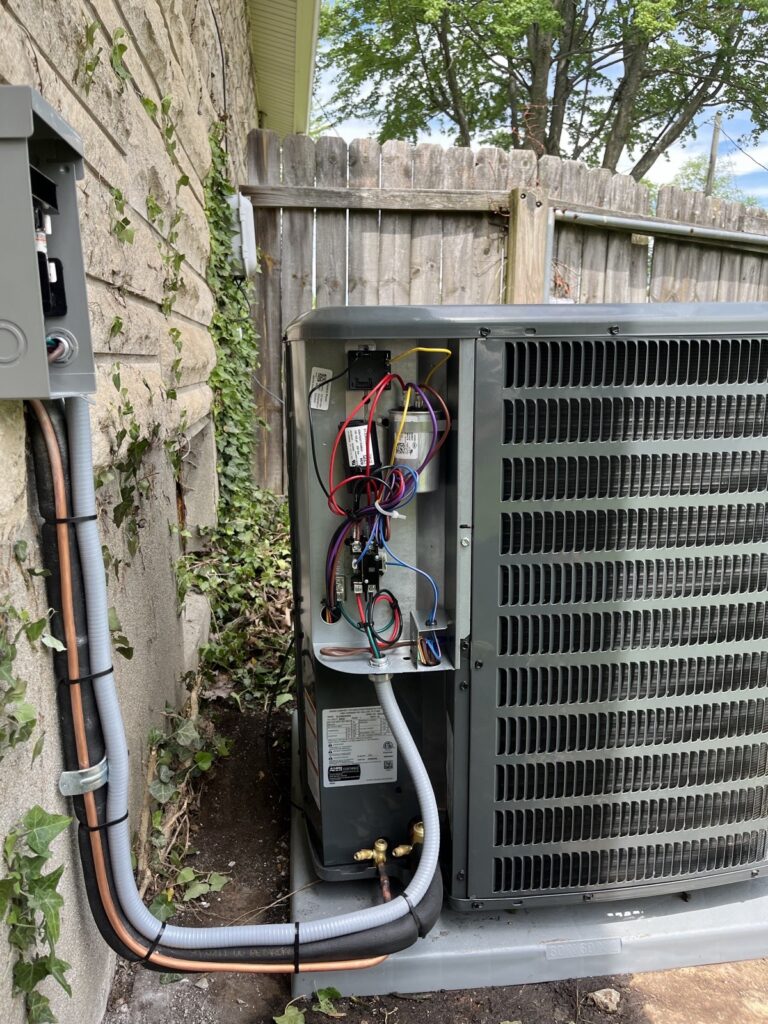
Here’s what our technicians do on a heating clean & check. If your previous “inspection” took fifteen minutes and nobody opened the cabinet, it wasn’t this.
- Heat exchanger inspection — visual inspection of the accessible surfaces, plus a combustion analysis and a check for flame disturbance when the blower starts, which reveals cracks that can’t be seen.
- Carbon monoxide testing — in the flue, at the supply registers and in the room, with a calibrated analyzer.
- Burner cleaning and flame inspection — burners cleaned, flame pattern checked, ignition tested.
- Gas pressure and gas leak check — manifold pressure set to spec; connections and the gas valve tested for leaks.
- Venting and flue — pipe condition, slope, joints, termination outside, draft; blocked or disconnected venting is one of the most common CO causes we find.
- Safety controls — high-limit switch, pressure switch, flame sensor (cleaned), rollout switches, door switch. These shut the furnace down when something goes wrong; they have to work.
- Blower and airflow — blower wheel cleaned, motor and capacitor tested, temperature rise measured across the heat exchanger. Restricted airflow is what cracks heat exchangers in the first place.
- Filter, condensate and drains — filter replaced or checked, condensate drain and trap cleared on high-efficiency furnaces.
- Thermostat and electrical — calibration, wiring, and connections tightened.
- Written findings — what was checked, what was measured, and anything that needs attention, before any repair is quoted.
Our fall furnace tune-up checklist covers the full list in homeowner terms, and the inspection above is exactly what’s included in the Fall Heating Clean & Check Special — $150 per system for the year, with the air conditioning visit in spring.
CO detectors: the backup every Louisville home needs
- Install a CO alarm on every level of the home and outside each sleeping area; a combination smoke/CO alarm near the furnace is a good addition.
- Test them monthly and replace batteries when you change the clocks.
- CO alarms expire — most have a replacement date (typically 7 to 10 years from manufacture) printed on the back. An expired alarm may not sound.
- Don’t rely on an alarm instead of an inspection. The alarm tells you CO has already reached the room; the inspection catches the cause first.
How often should a furnace be inspected?
Once a year, before heating season, by a licensed technician. Furnaces over 15 years old, furnaces in rental properties, and any furnace that has had a CO alarm go off or a flame-related repair should not skip a year. Members of our annual maintenance plan get the heating inspection every fall and the AC inspection every spring, with priority booking when the first cold snap hits. The long-term benefits of routine maintenance show up on the safety side as much as on the bill.
If your furnace fails the safety check
You’ll get a clear explanation of what was found, with readings, and a written quote for the fix. Some failures are simple — a flame sensor, a disconnected vent joint, a limit switch. A cracked heat exchanger on an older furnace is usually the point where replacement makes more sense than repair, and if the furnace is 15 years or older our clean & check already includes a free written replacement estimate. Read what to expect on furnace installation day so you know what that looks like, and see our furnace repair services for the smaller fixes.
Furnace safety FAQs
Can I inspect my furnace myself?
You can and should check the filter, keep the area around the furnace clear, make sure the vent terminations outside aren’t blocked by snow or leaves, and test your CO alarms. The heat exchanger, combustion and gas-pressure checks need a technician with the instruments to measure them.
My furnace is only a few years old — do I still need a safety inspection?
Yes. New furnaces fail less often, but venting shifts, drains clog and filters get forgotten regardless of age, and most manufacturers expect annual professional maintenance to keep the warranty in good standing.
What does a furnace safety inspection cost in Louisville?
Through our Fall Heating Special it’s included in the $150 annual plan (one system; $100 for each additional system), which also covers the spring AC visit and 10% off parts for the year. Call (502) 415-5214 or sign up online.
Does a heat pump need the same inspection?
A heat pump doesn’t burn fuel, so there’s no CO risk from the heat pump itself, but the electric backup heat, defrost cycle, refrigerant charge and airflow still need an annual check. Homes with a gas furnace as backup need the full furnace inspection. See heat pump vs. furnace for Louisville homes.
Haven’t had the furnace checked this year? Book the Fall Heating Clean & Check and a licensed technician (License # HM05930) will do the full safety inspection above, explain what they find, and put it in writing. Serving Louisville, Highview, Jeffersontown, St. Matthews, and the surrounding neighborhoods since 1975.