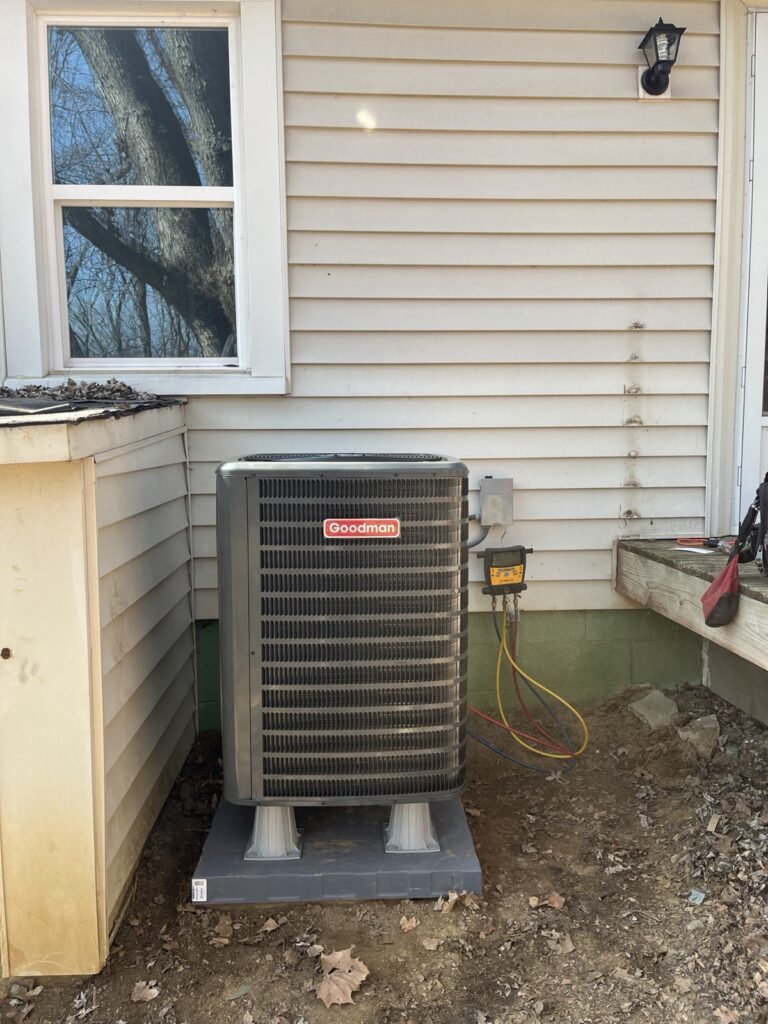
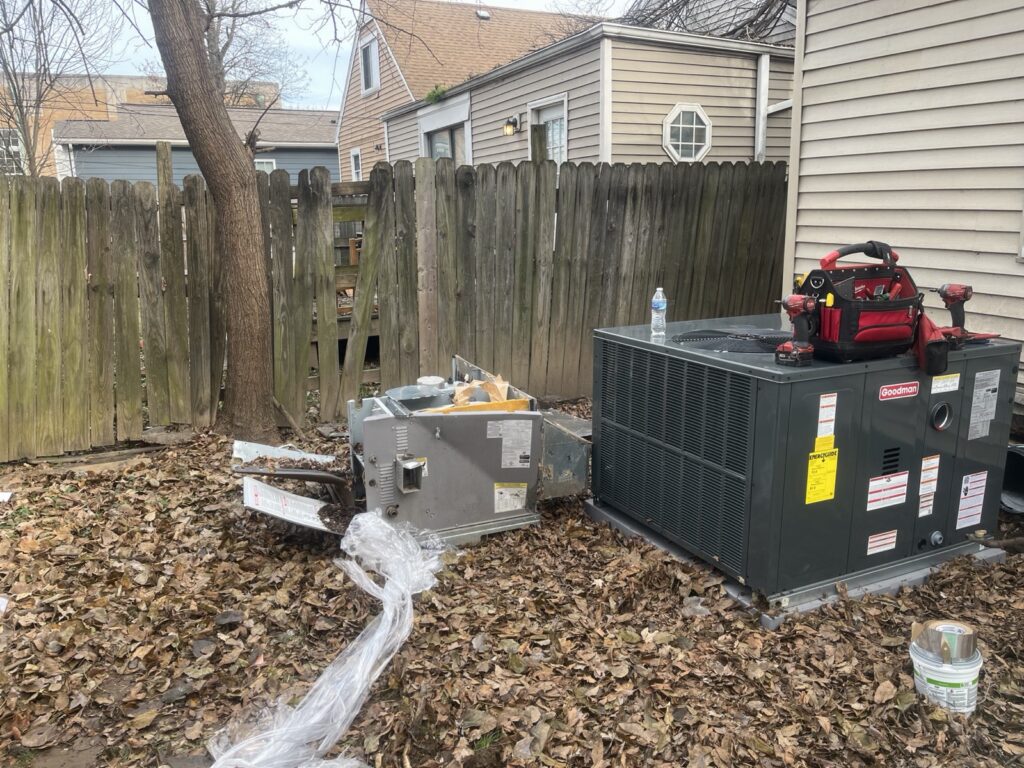
You’ve compared the repair quote to the replacement quote, picked a system, and booked the date. Now what? Most Louisville homeowners have never watched a furnace installation, so here’s the whole day, start to finish — how long it takes, what the crew actually does, what you need to do beforehand, and how to tell a good install from a rushed one. This is how a furnace installation goes when Litsey Heating and Air does it.
How long does a furnace installation take?
A straightforward furnace replacement — same location, existing ductwork in decent shape — takes most of a day: typically 4 to 8 hours with a two- or three-person crew. Replacing the furnace and the air conditioner together, adding a new line set, or correcting ductwork can push the job to a day and a half. We tell you the expected finish time when we confirm the appointment, and your heat is back on before the crew leaves. For what drives the price, see how much HVAC installation costs in Louisville.
Before installation day: three things to do
- Clear a path to the furnace. The old unit comes out and the new one goes in through the same route, so move storage, bikes and boxes out of the way in the basement, utility room or closet.
- Plan for the heat being off for a few hours. In January that means closing doors to unused rooms and, if someone in the house is elderly or unwell, a space heater in the room they’ll use.
- Know where your thermostat, gas shutoff and electrical panel are. The crew will find them, but it saves time if you can point.
What happens on installation day, step by step
1. Arrival and walkthrough
The lead installer confirms the equipment on the truck matches your written quote — model numbers, efficiency rating, thermostat — and walks the job with you: where the furnace sits, where the venting and condensate drain will run, and anything that will look different afterward. No surprises after the fact.
2. Protecting your home
Drop cloths on the floors along the route, shoe covers, and corner guards where the old furnace will be carried out. Leaving your home as clean as we found it is a rule, not a courtesy.
3. Shutting down and removing the old furnace
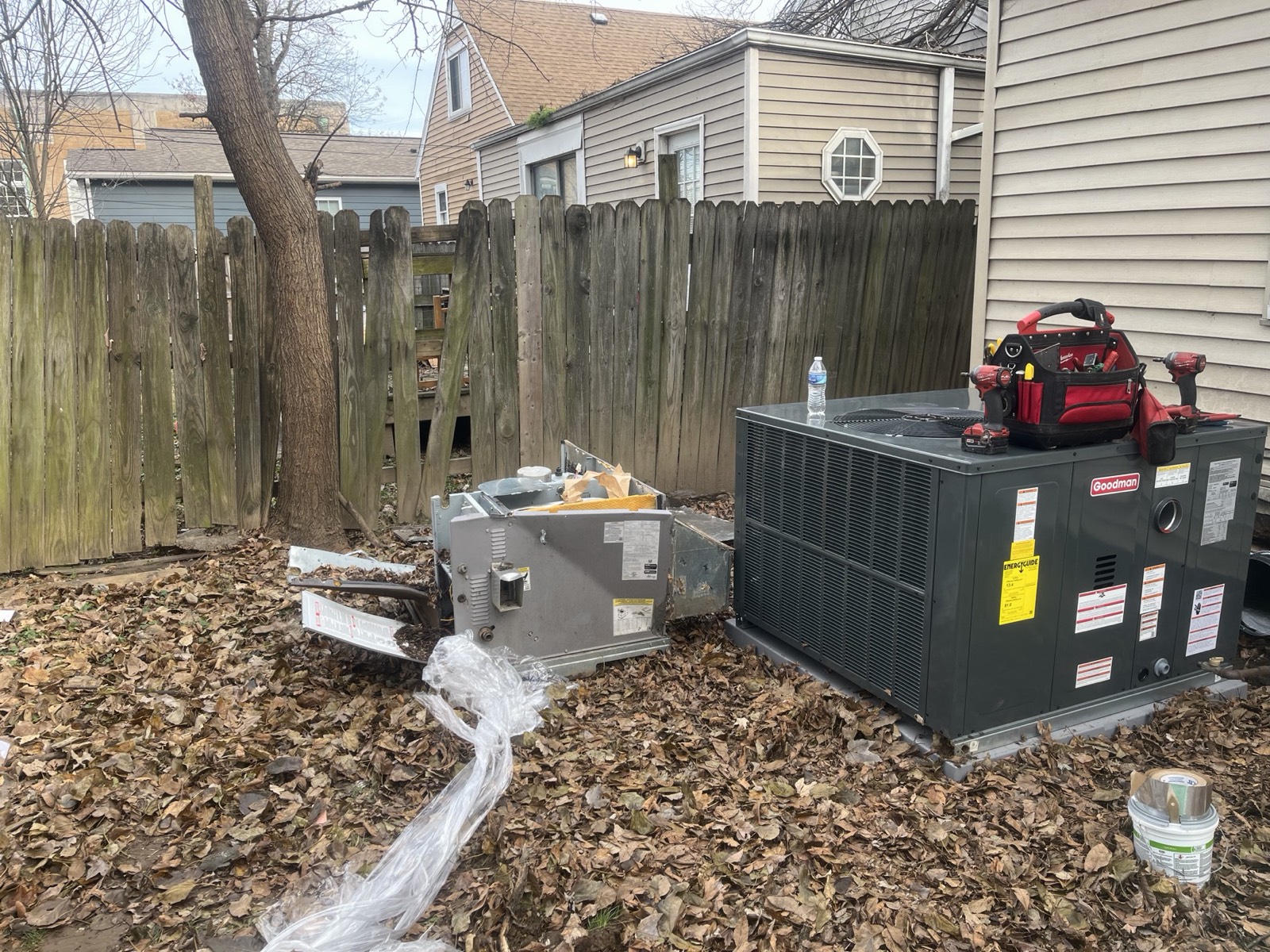
Gas is shut off at the valve, power is cut at the breaker and the disconnect, and the old furnace is disconnected from the gas line, venting, electrical and ductwork. It’s carried out and hauled away for recycling. This is also when we see what the old furnace was hiding — a corroded plenum, a return duct that was never sealed, a flue that’s undersized.
4. Setting the new furnace
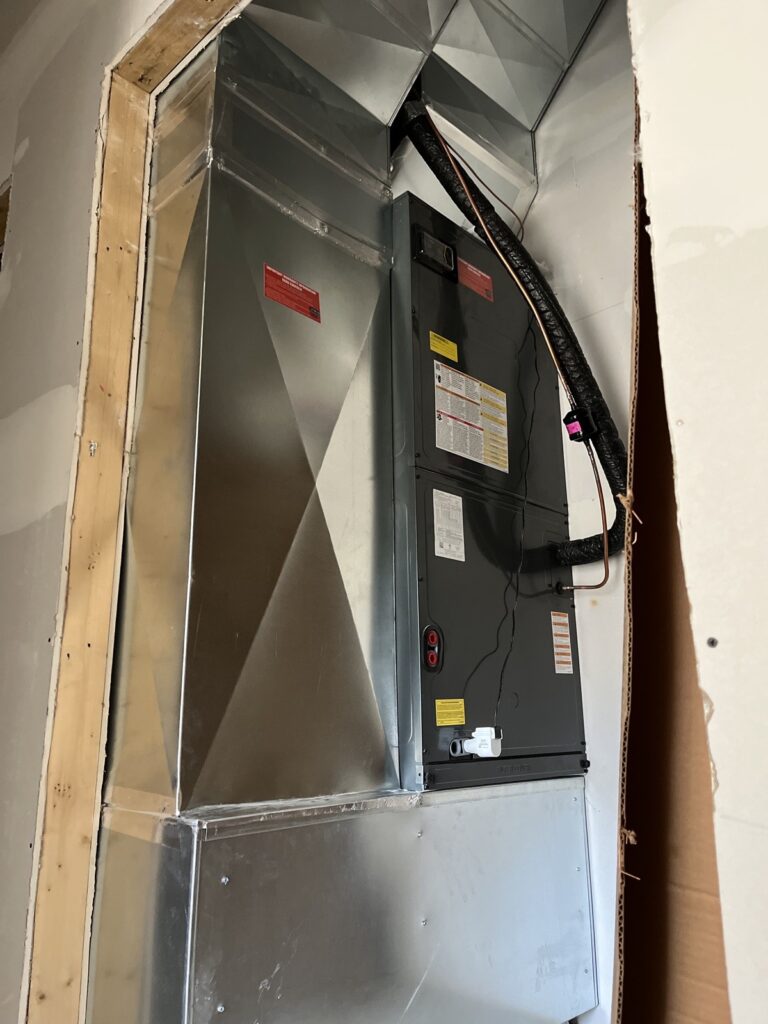
The new furnace is leveled and set, then the supply plenum and return are fitted. Because a new furnace is rarely the same size as the old one, the transitions are fabricated on site so the connections are tight and airflow isn’t choked. Tight ductwork matters as much as the furnace — read why a high heating bill is often a ductwork problem.
5. Gas, venting, condensate and electrical
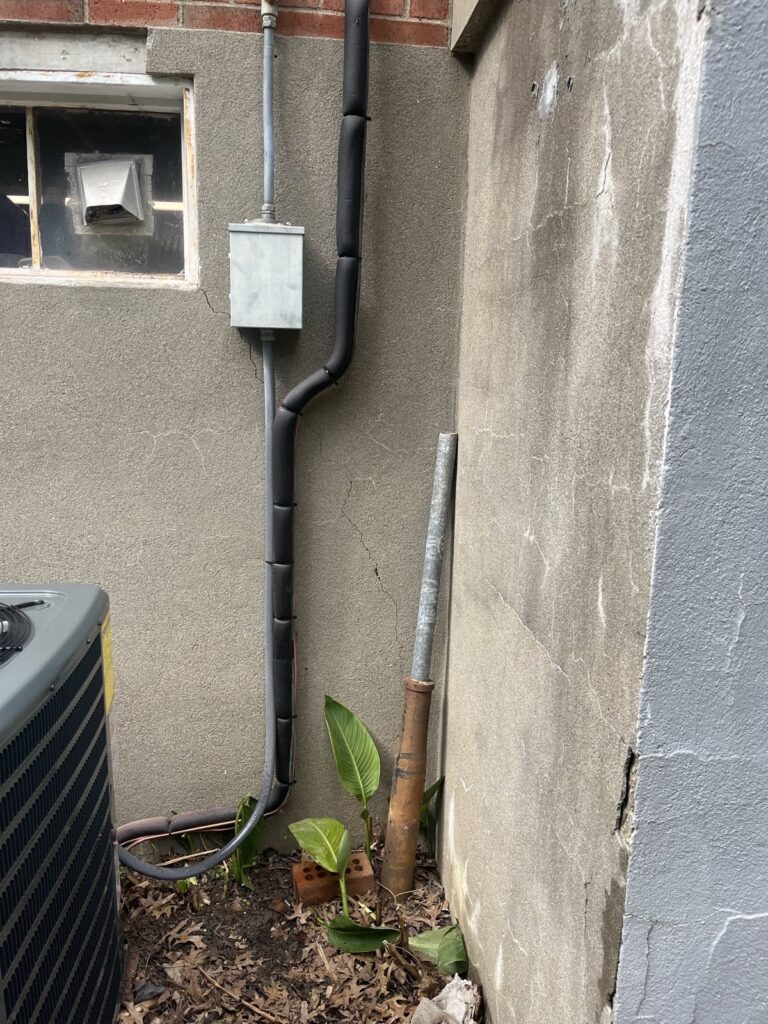
The gas line is reconnected and leak-tested. A high-efficiency (90%+ AFUE) furnace vents through PVC and produces condensate, so new vent pipes are run to the outside and a condensate drain is installed, often with a pump. The electrical is reconnected, the thermostat wiring checked, and a new thermostat installed if it’s part of the quote — most of our customers upgrade to a smart thermostat at this point.
6. Startup and commissioning — the part that separates installers
This is where a furnace is made to run right, not just run. The lead installer fires the furnace and checks:
- Gas pressure at the manifold, set to the manufacturer’s spec
- Temperature rise across the heat exchanger — too high means airflow is restricted, which shortens the furnace’s life
- Static pressure in the duct system, so the blower isn’t fighting the ducts
- Combustion and venting, including a check for carbon monoxide at the registers
- Safety controls — limit switch, pressure switch, flame sensor, rollout switches
- Thermostat operation through a full heating cycle
If an installer finishes without a manometer and a combustion analyzer coming out of the truck, the furnace wasn’t commissioned. Our furnace safety inspection guide explains what those readings mean.
7. Cleanup, walkthrough and paperwork
Tools out, floors swept, old equipment and packaging gone. Then the lead installer walks you through the new system: how to change the filter, what the thermostat is set to, where the shutoffs are, and what the new noises (or lack of them) mean. You get the model and serial numbers, the written warranty terms, and we register the equipment with the manufacturer so the parts warranty is active from day one. Where Louisville Metro requires a permit and inspection for the work, that’s handled as part of the job.
What a good furnace install looks like (and what a bad one looks like)
- Good: load calculation before the quote, fabricated transitions, sealed duct connections, PVC venting sloped correctly, condensate drain trapped and tested, commissioning readings written on the invoice, equipment registered.
- Bad: “same size as the old one” with no measurement, reused plenum with gaps, venting run uphill, no gas-pressure or temperature-rise check, cardboard left in the yard.
The brands we install — Goodman, Amana and Daikin — come with strong manufacturer warranties, but a warranty only covers parts. An installation done right is what keeps you from needing them. See our HVAC installation services in Louisville for how we quote and install.
After installation: the first month
- Expect a faint “new furnace” smell on the first few cycles as manufacturing oils burn off the heat exchanger — it should be gone within a day.
- Check the filter after 30 days; construction dust from the install can load it faster than usual.
- Note your first full LG&E bill with the new furnace. Going from a 70–80% AFUE furnace to 95%+ usually shows up immediately.
- Put the first annual maintenance visit on the calendar — regular service is how a furnace reaches the 20-year mark.
Furnace installation FAQs
Do I need to be home during the installation?
Someone needs to let the crew in and be reachable by phone, and we’d like you there for the final walkthrough. You don’t need to stand over the crew all day.
Will the installation make a mess?
Some dust is unavoidable when ductwork is cut and the old furnace comes out, which is why floors are covered and the area is cleaned before we leave. If you have respiratory concerns, tell us and we’ll seal the work area.
Can you install a furnace in winter?
Yes — winter is when most furnaces are replaced, because that’s when they fail. A standard replacement has your heat back on the same day. If your furnace has already quit, see what to check before you call and our emergency heating service.
Should I replace the air conditioner at the same time?
If it’s a similar age, usually yes — one visit, one set of labor, and a matched system. Our guide to furnace repair or replace covers how to decide.
Is financing available for a new furnace?
Yes. Financing is available on new Goodman, Amana and Daikin systems, and new customers get $500 off a new installation — mention code HVAC500 when you book your estimate.
Ready for a written estimate? We measure first, quote in writing, and install the way it’s described above. Serving Louisville, Highview, Jeffersontown, St. Matthews, and the surrounding neighborhoods since 1975 — veteran-owned, licensed (License # HM05930).