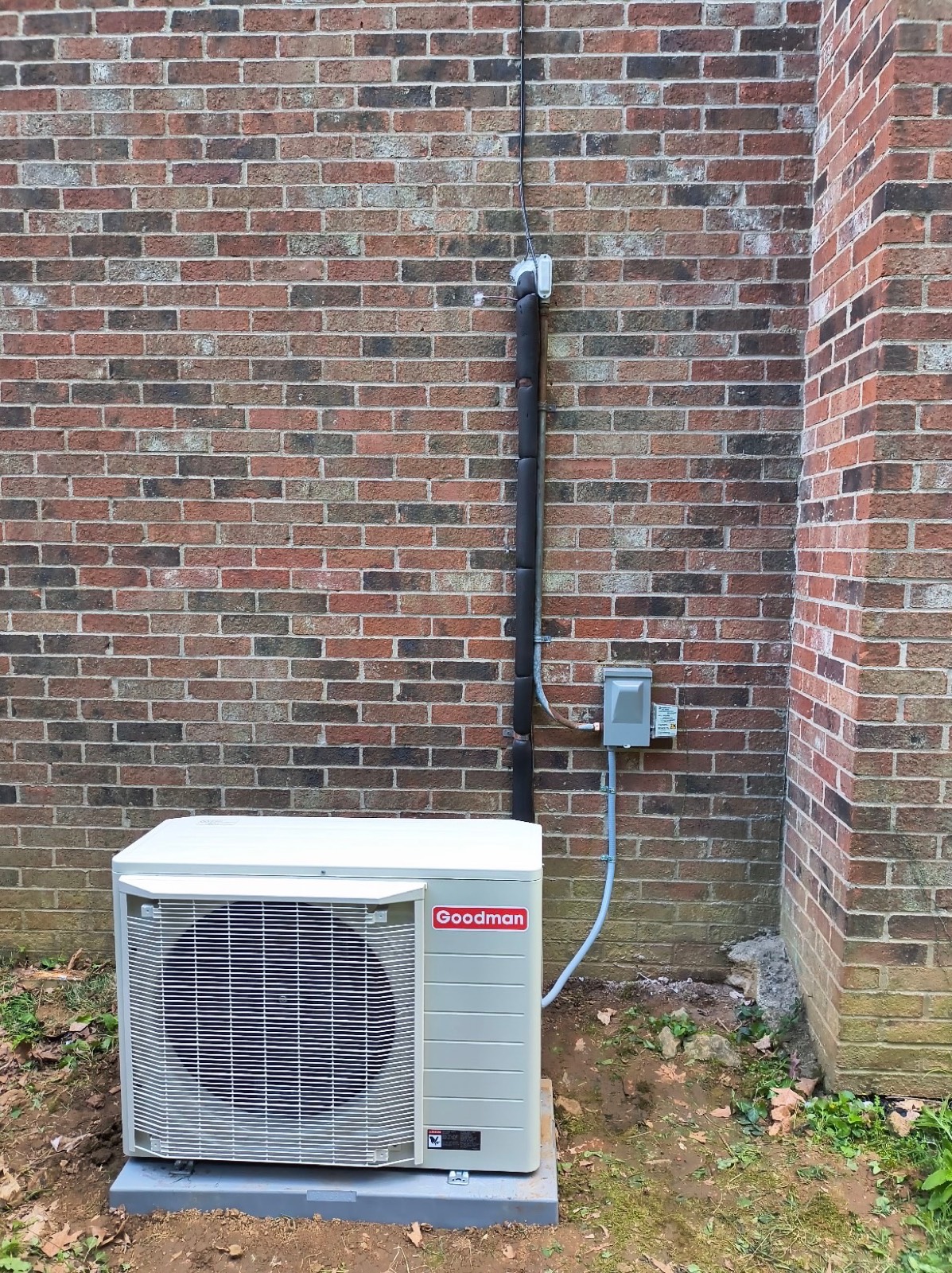
The short answer: a gas furnace in a Louisville home typically lasts 15 to 20 years, and the ones that reach 20 or beyond almost always had regular maintenance. But “typical” hides a lot — furnace type, how it was sized and installed, how often the filter was changed, and even how damp the basement is all move that number by years. Here’s how long each kind of furnace lasts in Kentucky, how to find out how old yours actually is, the seven signs it’s near the end, and how to decide between one more repair and a replacement without getting talked into either.
Furnace lifespan by type
- Gas furnace (most Louisville homes): 15–20 years. Well-maintained, correctly sized units reach 20–25. We still see the occasional 30-year-old furnace running — usually a simple, oversized standing-pilot model in a dry basement — but by then it’s burning far more gas than a new one and the heat exchanger is living on borrowed time.
- High-efficiency (90%+) gas furnace: about the same 15–20 years as an 80% model if the condensate drain and secondary heat exchanger are kept clean. Acidic condensate that’s allowed to sit shortens their lives; this is the maintenance item people skip.
- Electric furnace: 20–30 years. No combustion, no heat exchanger to crack, fewer parts — but the highest operating cost in Kentucky, which is why most electric furnaces get paired with or replaced by a heat pump.
- Heat pump (as the primary heat source): 10–15 years, because it runs year-round as both heater and air conditioner. Read how heat pumps handle Louisville winters and heat pump vs. furnace before choosing one.
- Boiler: 20–30 years for modern boilers; cast-iron units in older Highlands and Crescent Hill homes can go longer.
- Ductless mini-split: 15–20 years for the outdoor unit; see when a mini-split is worth it here.
Why Kentucky is a little different
Louisville winters are moderate by Midwest standards. A furnace here logs fewer burner hours a year than one in Chicago or Minneapolis, which should mean a longer life. What works against local furnaces is moisture: our humid summers mean the same cabinet holds an air-conditioning coil that sweats for five months, and the basements and crawlspaces many Louisville furnaces live in stay damp. Rust on the burner assembly, the cabinet and the heat exchanger ends more local furnaces than sheer run time does. The other local pattern is oversizing — furnaces replaced “like for like” with the big unit the house had in 1985, before it got new windows and attic insulation. An oversized furnace short cycles from day one and wears out years early.
How to find out how old your furnace is
Open the upper furnace door and look for the data plate (a sticker or metal tag) with the model and serial number. For Goodman and Amana furnaces built since the early 2000s, the first two digits of the serial number are the year and the next two are the month — a serial starting 1410 was built in October 2014. Other manufacturers encode it differently (Carrier and Bryant use the week and year in the first four digits, for example). If you’d rather not decode it, send us a photo of the plate or ask at your tune-up and we’ll tell you the age on the spot. Other clues: the installation sticker a previous contractor left on the cabinet, your home inspection report, or the simple fact that a furnace with a standing pilot light is almost certainly 25 years old or more.
What shortens a furnace’s life
- Skipped maintenance. Dirty burners cause delayed ignition that stresses the heat exchanger; a dirty flame sensor causes lockouts and short cycling; a dirty blower wheel overheats the motor.
- Clogged filters. Restricted airflow overheats the heat exchanger every cycle. Cracked heat exchangers — the failure that ends most furnaces — are overwhelmingly an airflow story.
- Wrong size. Too big means constant short cycling; too small means running flat out all winter. Both wear parts early.
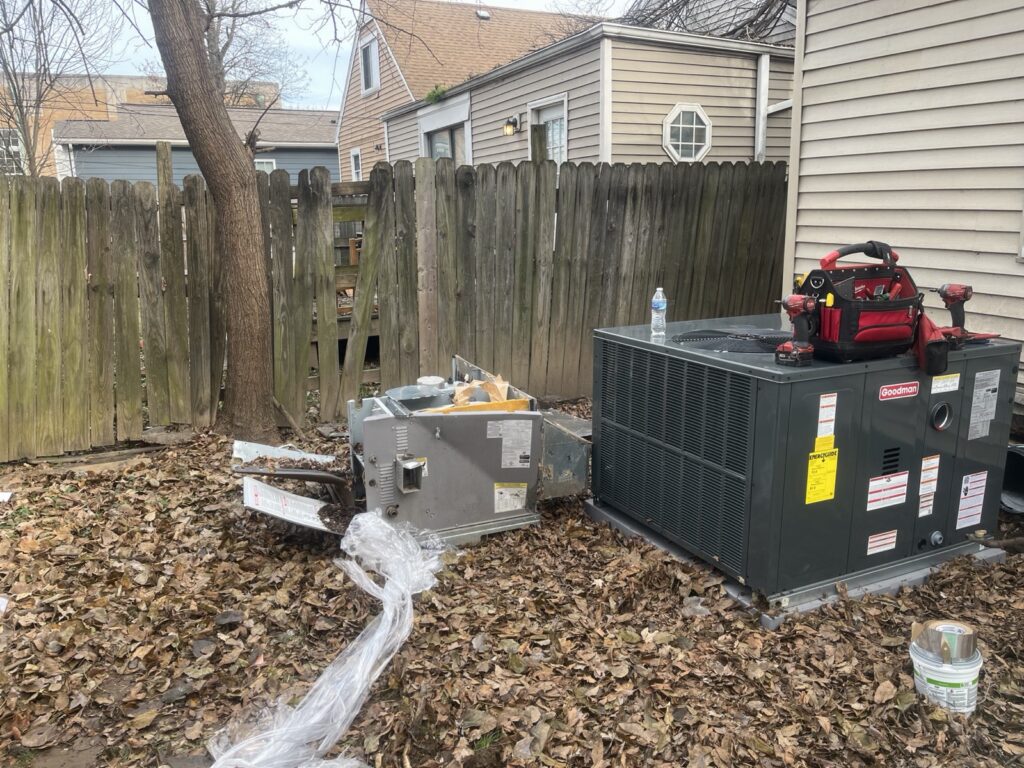
- Poor installation. Undersized return ducts, a flue that doesn’t draft properly, no condensate trap on a 90% furnace — the mistakes made on day one are paid for every year after. Here’s what a proper installation day looks like.
- Moisture and corrosion. A damp basement, a leaking AC coil above the furnace, or a condensate drain that overflows into the cabinet.
- Power problems. Surges and brownouts take out control boards and motors; a whole-home surge protector is cheap insurance for a modern furnace’s electronics.
What extends it
None of this is complicated: a fall clean and check every year, a filter changed every one to three months, the AC coil and drain cleaned each spring, registers left open, and a furnace that was sized by a heat-loss calculation rather than a guess. Homeowners on our Annual Service Plan get both seasonal visits for $150 a year per system, and the record of those visits is also what makes a warranty claim painless if a part does fail.
7 signs your furnace is near the end
- It’s 15 or older and needs a second significant repair. One repair on an old furnace is normal; two in two winters is a pattern.
- Your gas bill keeps rising with no change in rates or weather. Efficiency drops as heat exchangers scale and burners drift out of adjustment. See why heating bills jump.
- Uneven heat — rooms that used to be fine are now cold, and the furnace runs longer to get there. Our uneven heating guide separates duct problems from a tired furnace.
- Yellow or flickering burner flames, soot, or a CO alarm. These are combustion or heat-exchanger warnings. Shut it off and read our carbon monoxide guide.
- New noises — banging at startup, squealing, rattling from inside the cabinet. What each furnace noise means.
- Short cycling that started recently on an older furnace often means a restricted heat exchanger tripping the limit switch.
- Visible rust, cracks or water on the cabinet or around the base, or a technician has found a cracked heat exchanger. A cracked heat exchanger on a furnace past 12–15 years is a replacement, not a repair.
Repair or replace? Two rules of thumb
The $5,000 rule: multiply the furnace’s age by the cost of the repair. If the result is over $5,000, replacement usually wins. A 7-year-old furnace with a $600 blower motor is $4,200 — repair it. A 16-year-old furnace with the same $600 repair is $9,600 — put that money toward a new one. The 50% rule says the same thing from the other side: if a repair costs more than half the price of a new furnace, replace. Neither rule accounts for safety — a cracked heat exchanger ends the conversation at any age — or for a furnace that’s simply the wrong size for the house. We work through the full decision, with real Louisville numbers, in Furnace repair or replace?
What replacing it involves
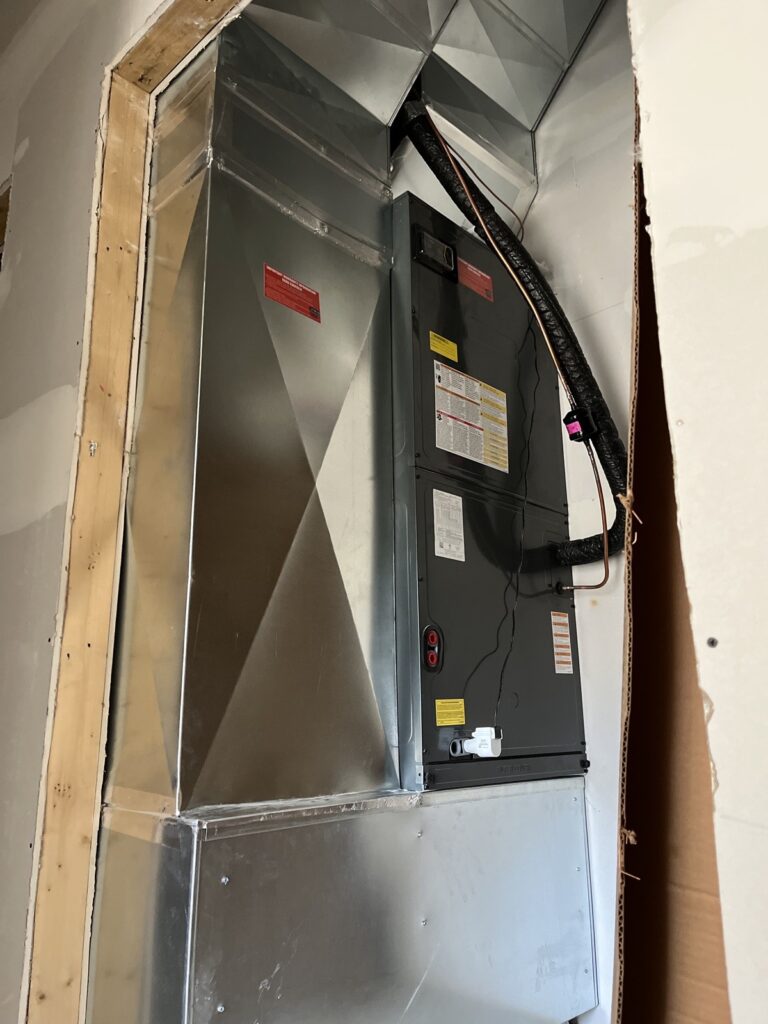
A furnace-only replacement is usually a one-day job; a furnace plus air conditioner is one long day or two. Prices depend on efficiency tier, staging and ductwork — our installation cost guide lays out current local ranges. If your air conditioner is also 12+ years old, read whether to replace the furnace and AC together before you decide; the 2025 refrigerant change makes that question more important than it used to be. And if you’re deciding between a furnace and a heat pump this time, start with the best system for Louisville’s winters.
Should you replace a furnace before it fails?
If it’s 18–20 years old and showing two or more of the signs above, there’s a strong case for replacing it on your schedule rather than its: you choose a mild week instead of a January night, you can compare quotes without a space heater running, and you avoid emergency pricing and a damaged house if a failure comes with a water leak or a CO event. For furnaces 15 years and older, our fall clean and check includes a free written replacement estimate — no obligation, just the number so you can plan. The Fall Heating Clean & Check Special is $150 per system for the year, including the spring AC visit.
Furnace lifespan FAQs
Can a furnace last 30 years?
Some do — usually simple older models, maintained every year, in dry basements. But a 30-year-old furnace is 60–70% efficient at best against 95–96% for a new one, parts are getting scarce, and the heat exchanger has had three decades of thermal cycles. “Still running” and “worth keeping” aren’t the same thing.
How long do Goodman furnaces last?
The same 15–20 years as other major brands when properly installed and maintained. The install and the maintenance matter far more than the badge; that’s why we size every Goodman and Amana furnace we install with a heat-loss calculation and register it so the 10-year parts warranty is in place.
Does a high-efficiency furnace last as long as an 80% furnace?
Yes, with one condition: the condensate system has to be kept clean. The secondary heat exchanger in a 90%+ furnace handles acidic condensate, and a neglected drain or trap is what shortens their lives. On a plan, that’s a two-minute item each fall.
Is it worth repairing a 20-year-old furnace?
For a cheap part — a flame sensor, igniter or capacitor — often yes, to get through the season while you plan. For a blower motor, control board, gas valve or anything heat-exchanger related, usually no; run the $5,000 rule and see our repair-or-replace guide.
How long does a new furnace take to install?
Most furnace replacements are finished in a single day, with heat back on that evening. Here’s the step-by-step.
Not sure how much life your furnace has left? Send us a photo of the data plate or book a clean and check — furnaces 15+ get a free written replacement estimate with it. Serving Louisville, Highview, Jeffersontown, St. Matthews and the surrounding neighborhoods since 1975 — veteran-owned, licensed (License # HM05930).
Request a Callback 📞 (502) 415-5214
Request a callback from our office
Tell us what's going on and our office will call you back during business hours, Mon–Fri 8AM–6PM. No heat or no cooling right now? Call (502) 415-5214 — the emergency line is answered 24/7.
- Licensed & insured — KY License # HM05930
- 2-hour arrival windows, quote before any work begins
- Veteran-owned, serving Louisville since 1975