Your furnace is on its last legs, the air conditioner still runs, and the estimate includes an option to replace both. Is that an upsell, or the smart move? For a lot of Louisville homes it’s genuinely the smart move — but not for all of them. Here’s how the two halves of your system depend on each other, when replacing the furnace and AC together saves money, when it doesn’t, and a 2025 refrigerant change that has shifted the math.
First, the thing most homeowners don’t know: it’s one system
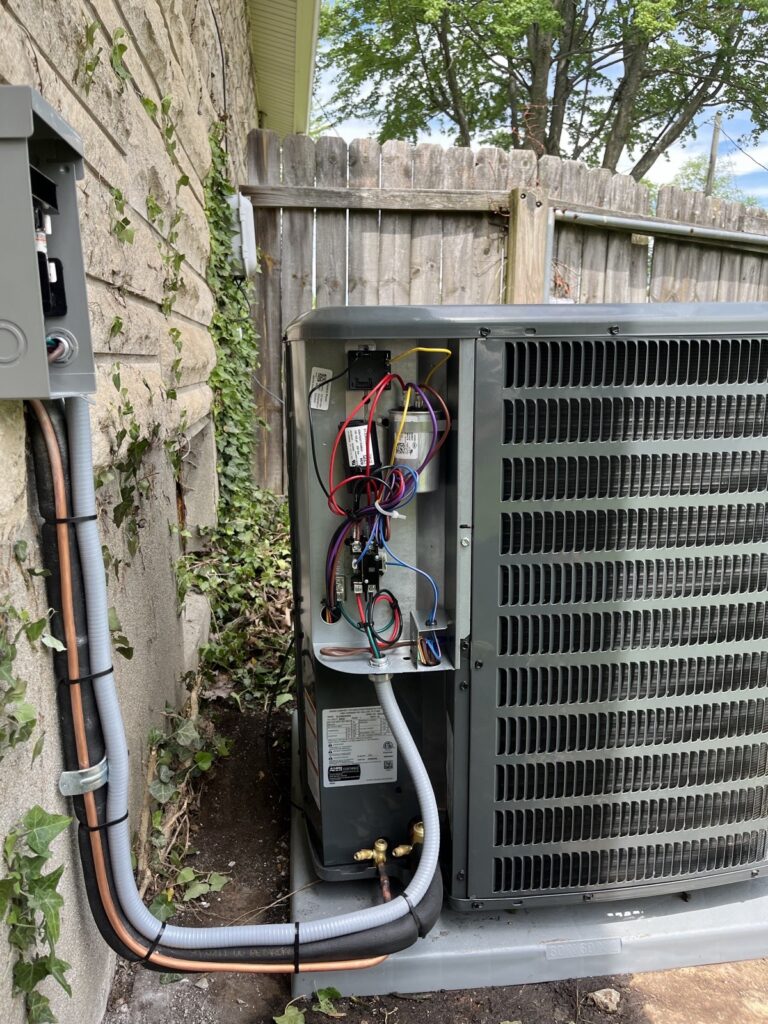
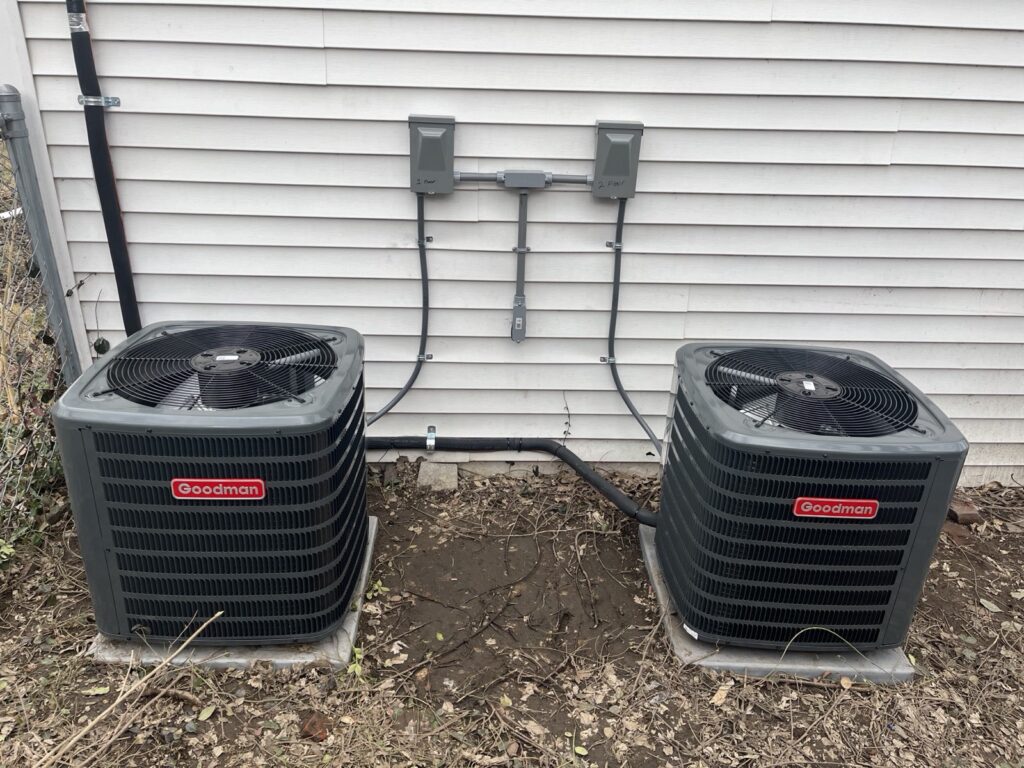
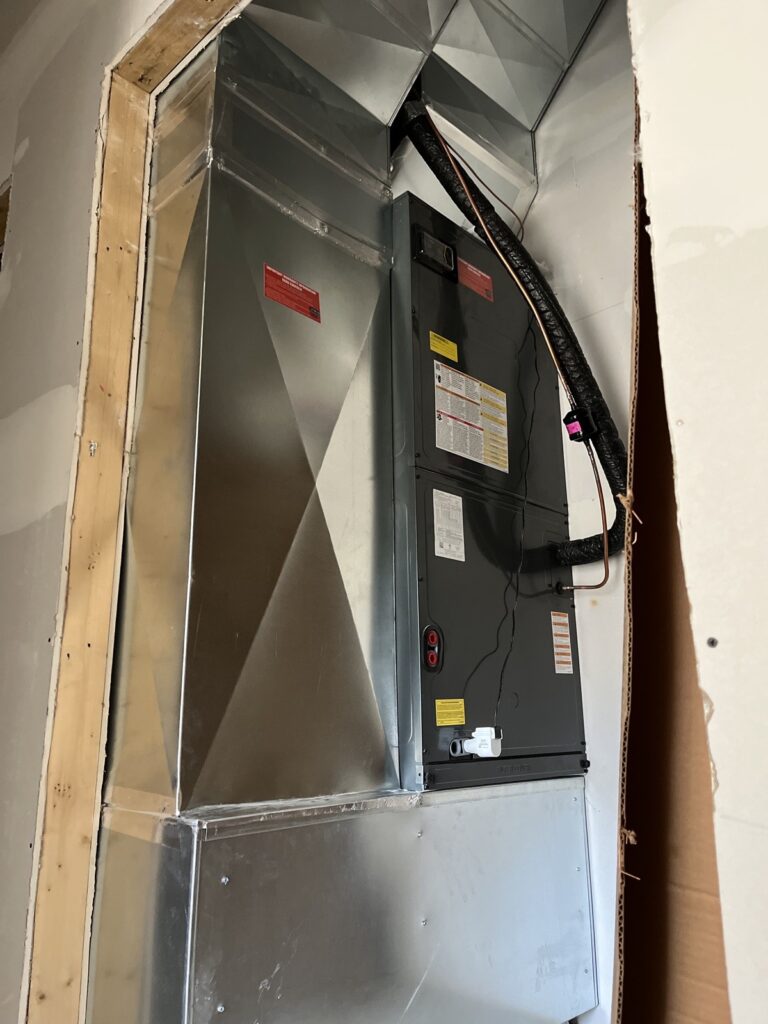
In a typical Louisville home the “furnace” and the “air conditioner” share most of their parts. The furnace cabinet holds the blower that moves air for both heating and cooling. The air conditioner’s indoor coil sits on top of the furnace. The thermostat, ductwork, electrical and condensate drain are shared. The only piece that’s purely “AC” is the outdoor unit. So when you replace a furnace, you’re replacing the blower your air conditioner depends on, and when you replace an air conditioner, the new outdoor unit has to match the coil and blower inside.
When replacing both at once makes sense
- Both are near the end of their life. Air conditioners in our climate typically last 12–15 years; furnaces 15–20. If the furnace is 17 and the AC is 13, the AC is likely to fail within a couple of years anyway — and you’d pay a second crew, a second day off work and a second set of startup costs.
- You want the efficiency you’re paying for. A new high-efficiency air conditioner’s rating (SEER2) assumes a matched indoor coil and a blower that can move the right airflow. Bolt a new outdoor unit onto an old furnace blower and coil and you often get a fraction of the rated efficiency and a system that short-cycles.
- The refrigerant has changed. Air conditioners and heat pumps manufactured since 2025 use a new class of refrigerant (R-454B or R-32) instead of R-410A. A new outdoor unit needs an indoor coil designed for the same refrigerant, so pairing it with an older coil usually isn’t an option — and R-410A for topping up older systems is getting scarcer and more expensive each year.
- Labor overlap. Removing and setting the furnace is most of the day’s work; adding the coil and outdoor unit while the crew is already there is far cheaper than a separate visit. See what happens on installation day.
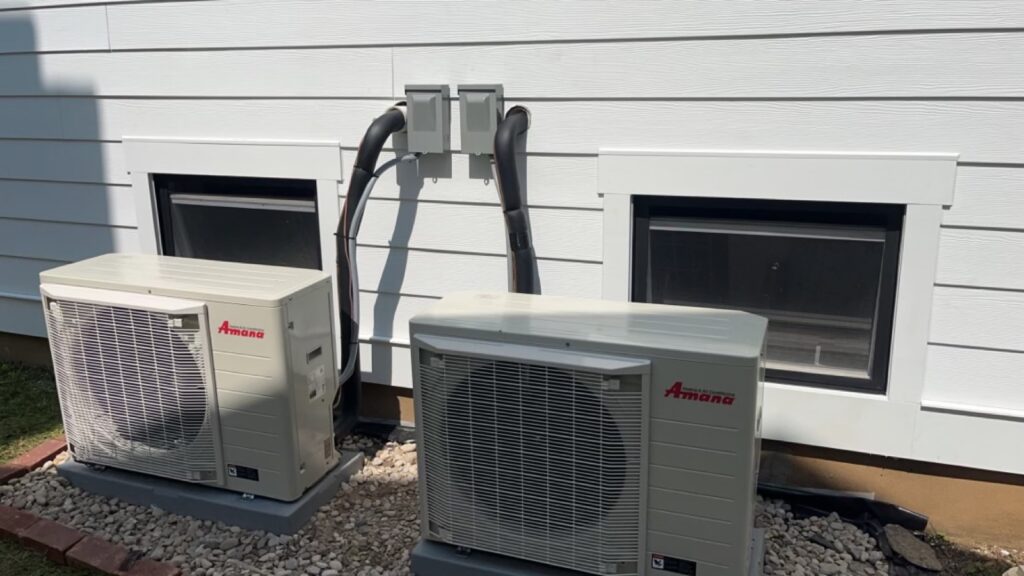
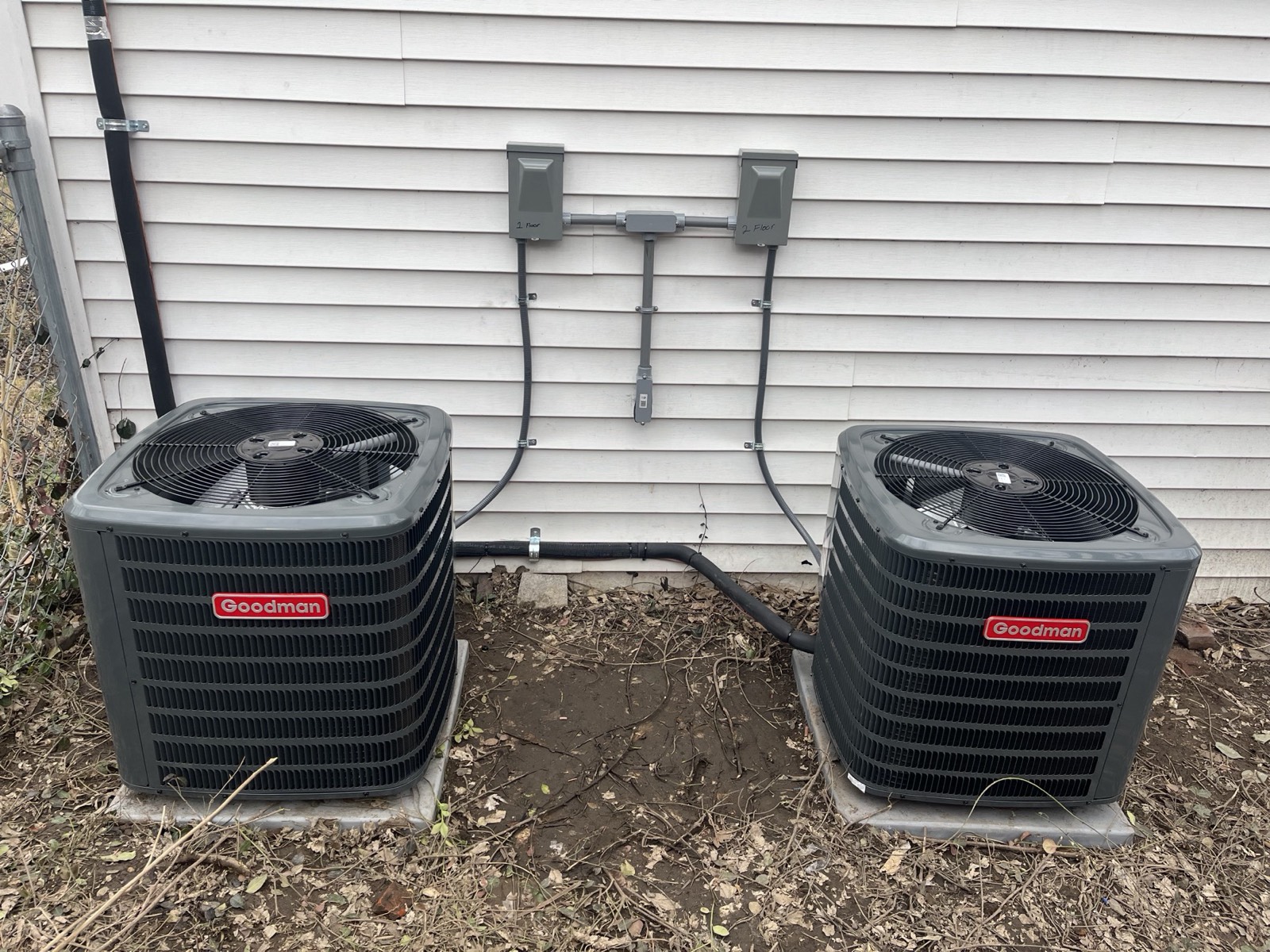
- One warranty, one registration, one service history. Matched systems from Goodman and Amana carry the manufacturer’s parts warranty on everything at once, and there’s never a dispute about which piece caused a problem.
- Financing covers it. If you’re financing the furnace anyway, the AC adds relatively little to the monthly payment compared with buying it separately in two years at full price.
When it’s fine to replace just one
- The other half is young. An AC under 8 years old with no history of problems is worth keeping. We’ll size the new furnace’s blower to match it and confirm the coil is compatible.
- The budget only stretches to the emergency. If the furnace died in January and the AC is fine, replace the furnace now — but ask for a quote that’s designed so the AC can be added later without redoing work. A good installer plans for that.
- You’re moving soon. If the house will be sold in a year or two, a working furnace matters to buyers; a brand-new AC rarely returns its full cost in the sale price.
- You’re switching to a heat pump. A heat pump replaces the outdoor unit and takes over heating, so the question becomes heat pump plus furnace (dual-fuel) or heat pump plus air handler. Read how heat pumps handle Kentucky winters and heat pump vs. furnace.
What it costs — and how to compare quotes
A furnace-only replacement is the least expensive option on the day; a matched furnace-and-AC replacement costs more up front but noticeably less than two separate jobs. The variables are the same either way: equipment efficiency, home size, ductwork condition and whether the line set and electrical need updating. Our guide to HVAC installation costs in Louisville covers what belongs in the quote. When comparing quotes for a combined system, make sure each one lists:
- Model numbers for the furnace, coil and outdoor unit — and that they’re an AHRI-matched combination
- The efficiency ratings (AFUE for the furnace, SEER2 for the AC)
- A load calculation, not “same size as the old one”
- New line set or a flush, a new pad, and any duct or electrical corrections, itemized
- Permit, haul-away, startup/commissioning and warranty registration
New customers get $500 off a new installation with us — mention code HVAC500 — and financing is available on Goodman, Amana and Daikin systems.
A quick decision guide
- Furnace 15+ and AC 10+: replace together.
- Furnace 15+ and AC under 8: furnace now, AC later, designed for it.
- AC failed and furnace is 12+: strongly consider both — the new refrigerant makes a mismatch hard, and the furnace is next.
- AC failed and furnace under 10: AC and matched coil only.
- Either one has a safety problem (a cracked heat exchanger, for instance): the furnace decision is made for you — see furnace repair or replace.
Still deciding whether the furnace is really done? Our signs it’s time to replace your HVAC system covers the tells.
FAQs
Can I put a new air conditioner on my old furnace?
Sometimes. It depends on the furnace blower’s capacity, the existing coil, and the refrigerant — a new outdoor unit using R-454B or R-32 needs a matching indoor coil. We’ll tell you honestly whether your furnace can support it and what you’d give up in efficiency.
Is a “matched system” just a sales term?
No. Manufacturers certify specific furnace/coil/outdoor-unit combinations (AHRI matches) for a reason — the published efficiency and the warranty both depend on them.
How long does a full-system replacement take?
Usually one full day for a furnace, coil and air conditioner; a day and a half if ductwork or electrical work is included. Heat is back on the same day.
Will replacing both lower my bills?
Almost always, if the old equipment was 15+ years old: a 95%+ AFUE furnace and a current-SEER2 air conditioner against 80% AFUE and 10–13 SEER equipment is a large efficiency jump in both seasons. See why heating bills run high for the other factors.
Want both numbers side by side? We quote furnace-only and full-system options in writing from the same visit, with the load calculation to back them up. Serving Louisville, Highview, Jeffersontown, St. Matthews, and the surrounding neighborhoods since 1975 — veteran-owned, licensed (License # HM05930).