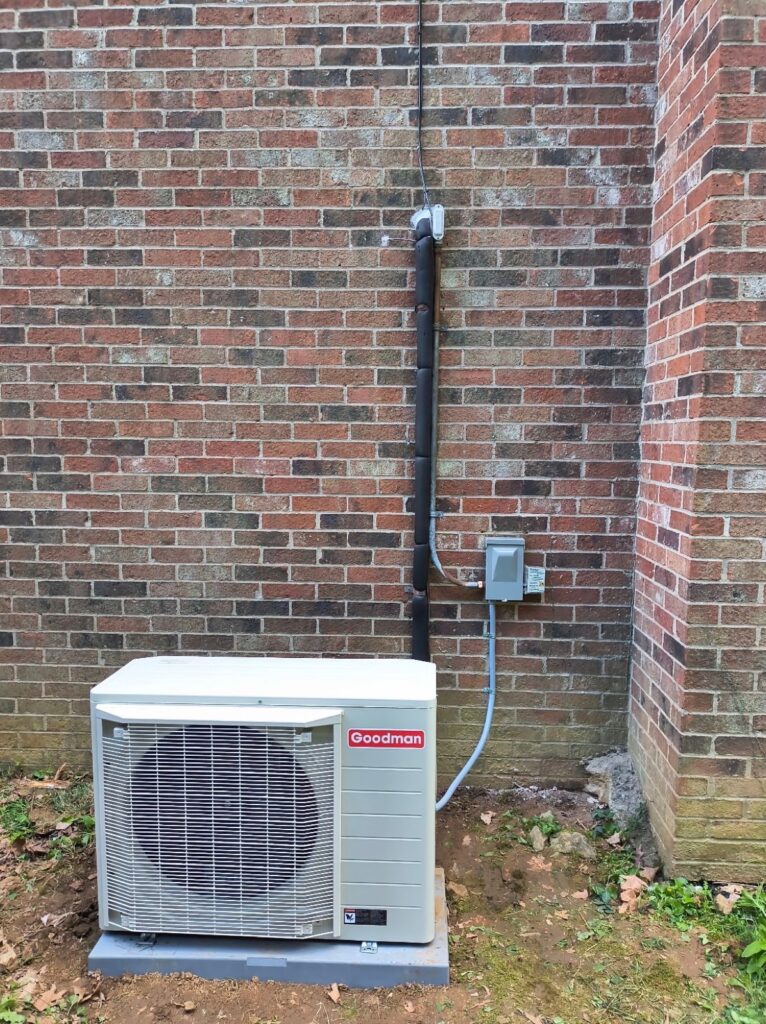
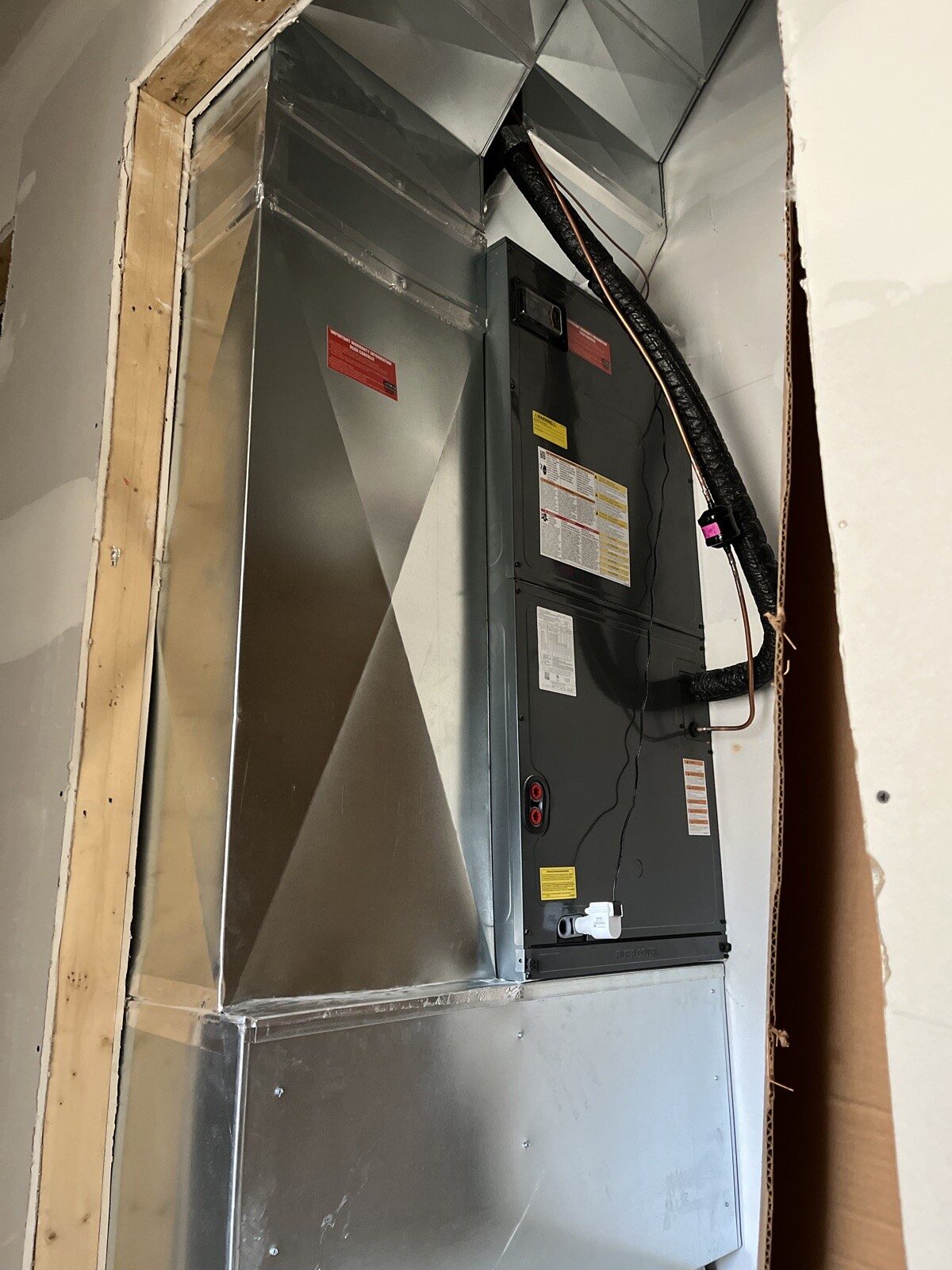
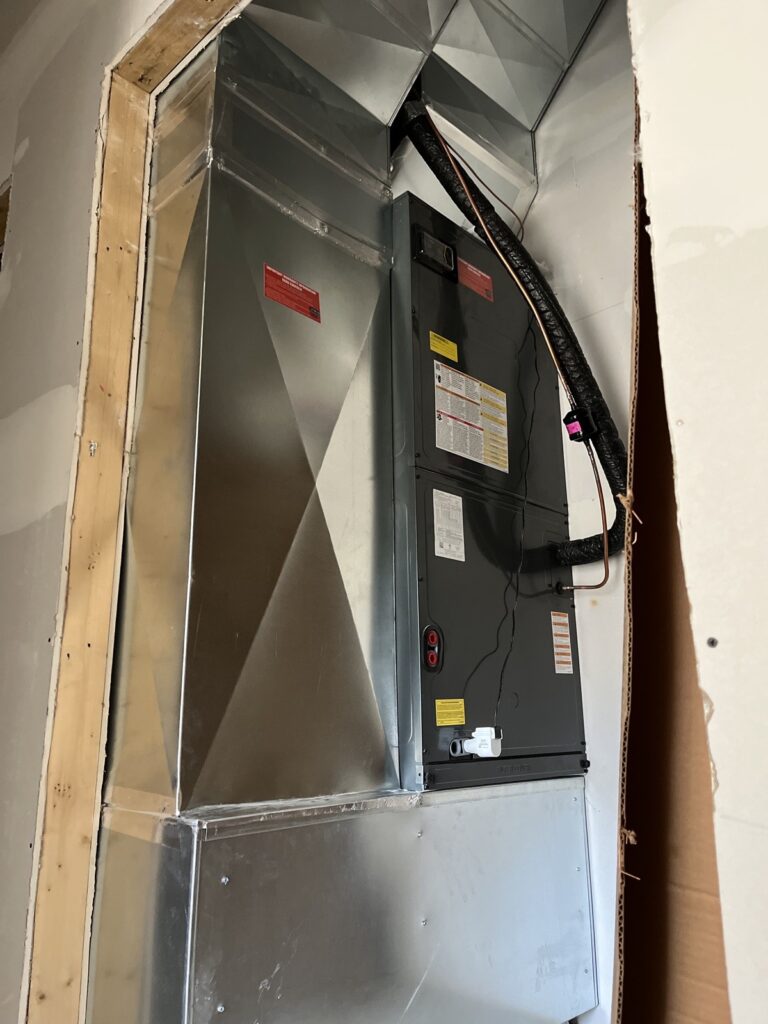
Every winter the same calls start in late November: the furnace is working fine, but everyone’s getting static shocks off the door handles, the kids have nosebleeds, the hardwood floors have opened up gaps, and the house feels colder than the 70°F the thermostat insists on. That’s dry air. Louisville’s outdoor air in January holds very little moisture, and once the furnace warms it to room temperature the relative humidity indoors drops to 15–25% — drier than most deserts. A whole-home humidifier fixes it at the source. Here’s how they work, the three types, what they cost to buy and run, how to set one so you don’t get condensation on the windows, and who actually needs one.
Why winter air in Louisville is so dry
Cold air can’t hold much water. Outdoor air at 25°F and 70% humidity feels damp outside, but heat that same air to 70°F without adding moisture and its relative humidity falls to around 12%. Every time your furnace runs, it does exactly that, and the dry air then pulls moisture out of everything in the house: your skin, your sinuses, the wood trim, the piano, the dog. Older Louisville homes with original windows and leaky framing lose humidity even faster because they swap indoor air for outdoor air several times an hour. The target indoors is 30–50% relative humidity — the range we covered in our post on winter indoor air quality.
Signs your house is too dry
- Static shocks from doorknobs, light switches, the car door.
- Dry, itchy skin, chapped lips, scratchy throats and nosebleeds, especially first thing in the morning.
- Hardwood floors with new gaps, trim and door frames cracking, furniture joints loosening, a piano or guitar that won’t stay in tune.
- A house that feels cold at 70°F. Dry air pulls heat from your skin faster, so a humidified home at 68°F often feels as warm as a dry one at 71°F — which is why a humidifier is also on our list of ways to bring down a heating bill.
- Wallpaper seams lifting, more dust in the air, plants drooping between waterings.
- A $20 hygrometer from the hardware store reading under 30% — the only test that really settles it.
Portable humidifiers vs. a whole-home unit
Portable units work for one bedroom. Their drawbacks are the reasons people call us: filling the tank every day, a limit of a room or two, mineral dust from tap water, noise, and the mold that grows in a tank nobody cleans. A whole-home humidifier mounts on the furnace or air handler, feeds from a small water line, is controlled by a humidistat, and conditions every room the ductwork reaches. Maintenance is one water panel a season. It disappears into the system the way the furnace filter does.
The three types, and which fits a Louisville home
Bypass humidifier
The most common and least expensive. A water panel (a thick paper-like pad) sits in a housing on the supply or return plenum; a bypass duct lets warm air from the furnace pass through the wet pad and pick up moisture. It only adds humidity while the furnace is running and relies on the furnace blower, so it suits gas furnaces in average-sized homes — most of Louisville’s housing stock.
Fan-powered humidifier
Same wet-pad idea with its own small fan, so it moves more air through the pad and produces noticeably more moisture without a bypass duct. The right choice for larger homes, for tight utility closets where a bypass duct won’t fit, and for heat pumps and air handlers that run cooler, longer cycles.
Steam humidifier
An electric unit that boils water and injects steam into the ductwork, independent of whether the furnace is running. Highest output and the most precise control, at a higher purchase price and an electric running cost. It’s what we recommend for big or leaky homes, for homes heated by a heat pump (read how heat pumps behave in Louisville winters — their supply air is cooler, which evaporative pads don’t love), and for anyone who needs humidity held at a specific number for a wood floor, instruments or a health condition.
What they cost to buy, install and run
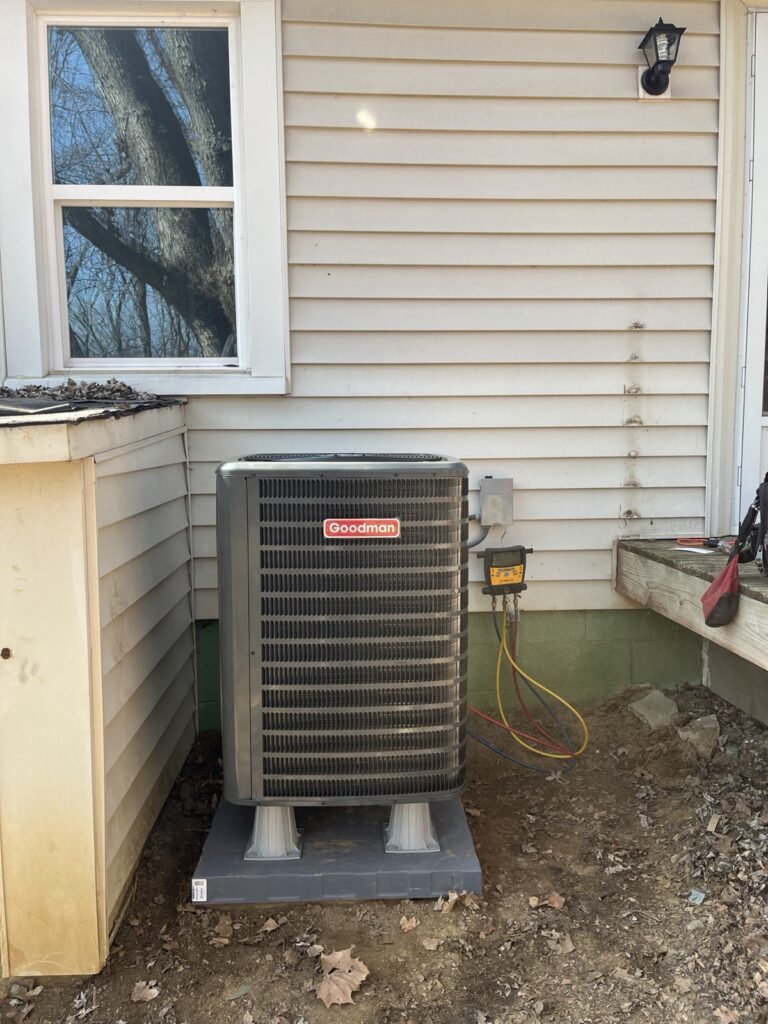
Nationally, a bypass humidifier installed usually lands in the several-hundred-dollar range, a fan-powered unit a step above that, and a steam unit in the low thousands; the exact number depends on the equipment, how far the water line and drain have to run, and whether a humidistat or your smart thermostat will control it. We quote in writing after looking at the furnace, the water supply and the drain options — never from a phone call. Running costs are small for bypass and fan-powered units (water, plus a water panel each season that costs about what a good furnace filter does). Steam units draw electricity when they boil, so they cost more to run but deliver humidity on demand. If you’re already planning a furnace replacement, adding a humidifier on the same day is the cheapest way to get one, because the plenum work and the line runs happen at once.
Setting it right: the outdoor-temperature rule
More humidity isn’t always better. Set too high in a cold snap and moisture condenses on the coldest surfaces — window glass first, then inside exterior walls where you can’t see it. The rule of thumb humidifier makers print on the dial: around 35% when it’s 20°F outside, 30% at 10°F, 25% at 0°F, and up to 40–45% in mild weather. If you see fog or water at the bottom of the windows, turn the humidistat down. Automatic humidistats with an outdoor sensor do this for you, and the better smart thermostats can control the humidifier directly (see our smart thermostat guide). In Louisville’s humid summers the humidifier must be off with its damper closed, or you’ll be adding moisture the air conditioner then has to remove.
Maintenance: one panel a year, and a look at the drain
Louisville water is moderately hard, so the water panel scales up over a season and should be replaced every fall; a clogged panel quietly stops humidifying. Fan-powered and steam units have a drain that needs to flow, and steam units need their canister or electrodes serviced on the maker’s schedule. All of it fits into the fall visit of an Annual Service Plan, where we change the panel, check the solenoid valve and the drain, and set the humidistat for the season.
What a humidifier does to your furnace and your heat pump
A humidifier is mounted to the system but isn’t a burden on it. A bypass unit borrows a little airflow; a fan-powered or steam unit borrows none. The thing to avoid is the opposite problem: a unit set too high in a tight, newer home, which can push humidity past 50%, fog the windows and encourage mold around them. For heat pumps, pick a fan-powered or steam unit — a bypass pad needs the warmer supply air a gas furnace makes. And if your furnace is very old, have it looked at first; a humidifier won’t help a system that’s on its way out (how long furnaces last in Kentucky).
Who should get one, and who shouldn’t
Good candidates: hardwood floors and wood trim (especially new floors, which gap in their first winter), anyone with winter nosebleeds, dry eyes, asthma or sinus trouble, homes with infants or older adults, musicians, older homes that feel cold at normal thermostat settings, and heat-pump homes with long heating cycles. Think twice: homes that already see condensation on the windows in winter, basements or crawlspaces with moisture problems, and very tight new construction with a fresh-air system that already holds 35–40% — a hygrometer reading for a few days answers it for less than a service call.
What installation involves
About half a day. We mount the unit on the supply or return plenum beside the furnace, run a water line with a proper shutoff (not a saddle valve, which leaks eventually), connect a drain for fan-powered or steam units, wire the control to the furnace so the humidifier only runs when the blower does, and install the humidistat or tie it into your thermostat. Then we set the humidity for the current outdoor temperature and show you the one dial you’ll ever touch. We install and service whole-home humidifiers across Louisville, on existing furnaces as well as new ones.
Whole-home humidifier FAQs
What humidity should my house be in winter?
30–50% overall, trimmed by the outdoor temperature: about 35% at 20°F, 30% at 10°F, 25% near 0°F. If the windows fog, you’re too high for the weather.
Will a humidifier lower my heating bill?
Indirectly. Humid air feels warmer, so most people are comfortable a degree or two lower on the thermostat, and each degree is worth a few percent on the gas bill over a winter. It won’t offset an inefficient furnace — the big levers are in our heating-bill guide.
Can a whole-home humidifier cause mold?
Only when it’s set too high for the outdoor temperature or left running into summer. Kept in the 30–45% range with the seasonal rule above, it does the opposite — overly dry or overly damp air are both what mold and viruses like; the middle is where people do best.
Does a humidifier work with a heat pump or a ductless system?
With a ducted heat pump, yes — fan-powered or steam. Ductless mini-splits have no ductwork to mount to; those homes use steam units with their own distribution or portable units per room.
How often do I change the water panel?
Once a season in Louisville, at the fall tune-up, or twice if your water is especially hard or the unit runs constantly. A white, crusty panel has stopped working.
Can you add one to my existing furnace?
Yes. Nearly any ducted furnace or air handler can take a bypass or fan-powered unit, and any ducted system can take steam. We check the plenum, the water supply and the drain on the first visit and quote it in writing.
Static, nosebleeds, gapping floors? A hygrometer costs $20; a whole-home humidifier is an afternoon’s work. Tell us what the house feels like and we’ll tell you which type fits. Serving Louisville, Highview, Jeffersontown, St. Matthews and the surrounding neighborhoods since 1975 — veteran-owned, licensed (License # HM05930).
Request a Callback 📞 (502) 415-5214
Request a callback from our office
Tell us what's going on and our office will call you back during business hours, Mon–Fri 8AM–6PM. No heat or no cooling right now? Call (502) 415-5214 — the emergency line is answered 24/7.
- Licensed & insured — KY License # HM05930
- 2-hour arrival windows, quote before any work begins
- Veteran-owned, serving Louisville since 1975